 Marcus Rivera
Best Seat Cushion for Office Chair: Complete Comfort Guide
If you spend eight or more hours a day sitting at a desk, you already know the feeling. That dull ache in your tailbone by mid-afternoon. The constant shifting to find a comfortable position. The stiffness that greets you when you finally stand up.
A quality seat cushion for your office chair can transform your workday. But with dozens of materials, shapes, and designs on the market, choosing the right one requires understanding what actually works and why. This guide breaks down the science behind ergonomic seat cushions and helps you find the right fit for your body and your chair.
Whether you are dealing with tailbone pain, poor circulation, or simply want to sit more comfortably, the right cushion makes a measurable difference in how you feel at the end of the day.
Why You Need a Seat Cushion
Standard office chairs, even expensive ones, distribute your body weight unevenly. Research published in the Journal of Physical Therapy Science (2015) found that prolonged sitting on flat surfaces concentrates pressure on the ischial tuberosities, the two bony prominences at the base of your pelvis. This concentrated pressure restricts blood flow to surrounding tissues and compresses the sciatic nerve.
The consequences are not trivial. A 2019 study in Ergonomics measured a 35% reduction in gluteal blood flow after just 30 minutes of uninterrupted sitting on a standard chair surface. Over weeks and months, this leads to muscle fatigue, tissue degeneration, and chronic discomfort.
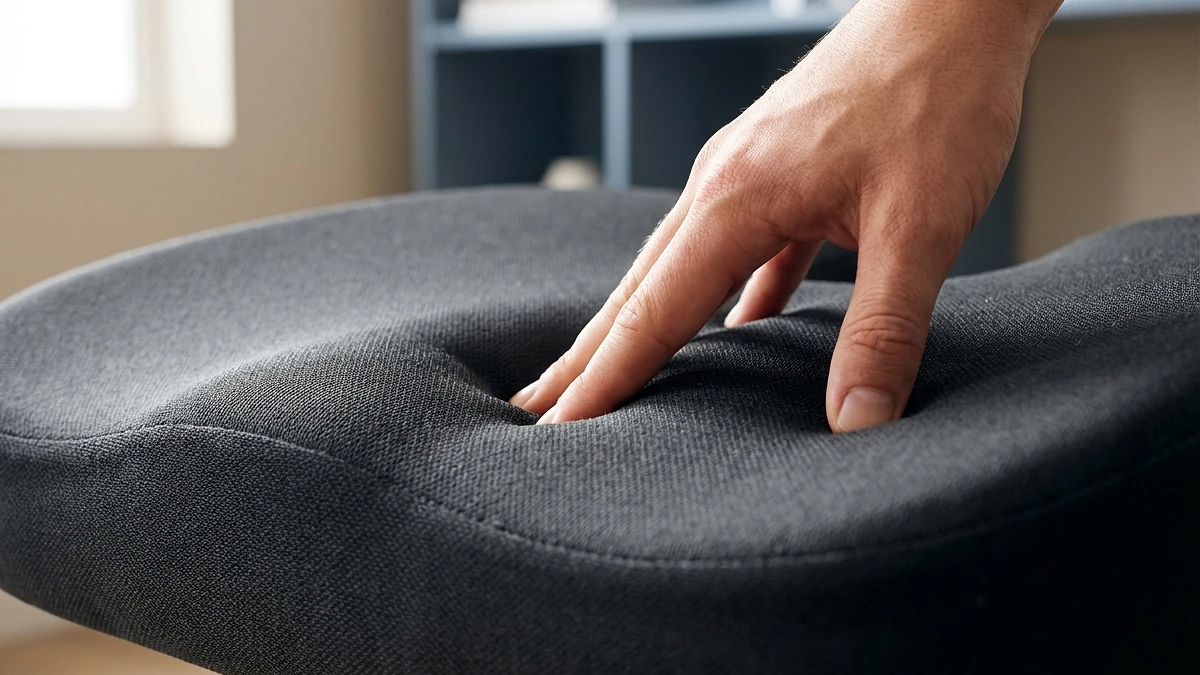
An ergonomic seat cushion addresses these issues by redistributing pressure across a wider surface area. The best designs cradle your sit bones while relieving the tailbone and promoting a slight forward pelvic tilt that encourages better spinal alignment.
- Pressure redistribution: Contoured cushions spread your weight across the thighs and hips, reducing peak pressure on any single point by up to 40%.
- Improved circulation: By reducing concentrated pressure, blood flows more freely to the muscles and soft tissues of your lower body.
- Tailbone relief: Cushions with a coccyx cutout or U-shaped design eliminate direct contact between your tailbone and the sitting surface.
- Posture correction: Wedge-shaped cushions tilt your pelvis slightly forward, encouraging the natural lumbar curve that flat seats eliminate.
These are not luxury benefits. For anyone who sits more than four hours daily, a seat cushion is a functional ergonomic tool, much like a lumbar support pillow or an adjustable monitor arm.
Types of Seat Cushions
Not all seat cushions serve the same purpose. Understanding the main categories helps you match a cushion to your specific needs.
Memory Foam Cushions
Memory foam is the most popular material for office seat cushions. It conforms to your body shape under heat and pressure, creating a custom fit that distributes weight evenly. High-density memory foam (at least 50 kg/m3) provides the best balance of comfort and support. Lower-density foam feels soft initially but bottoms out quickly, offering little long-term benefit.
Gel Cushions
Gel cushions excel at temperature regulation. They absorb and dissipate heat more effectively than foam, making them a good choice if you tend to get warm while sitting. Some designs use a gel grid structure that flexes under pressure, while others layer gel over a foam base. For a detailed comparison, see our memory foam vs gel cushion material guide.
Wedge Cushions
Wedge cushions are thicker at the back and thinner at the front, creating a slight forward slope. This tilt encourages your pelvis to rotate anteriorly, which naturally restores the lumbar curve many people lose when sitting on flat surfaces. Wedge cushions are particularly effective for people who tend to slouch.
Coccyx Cutout Cushions
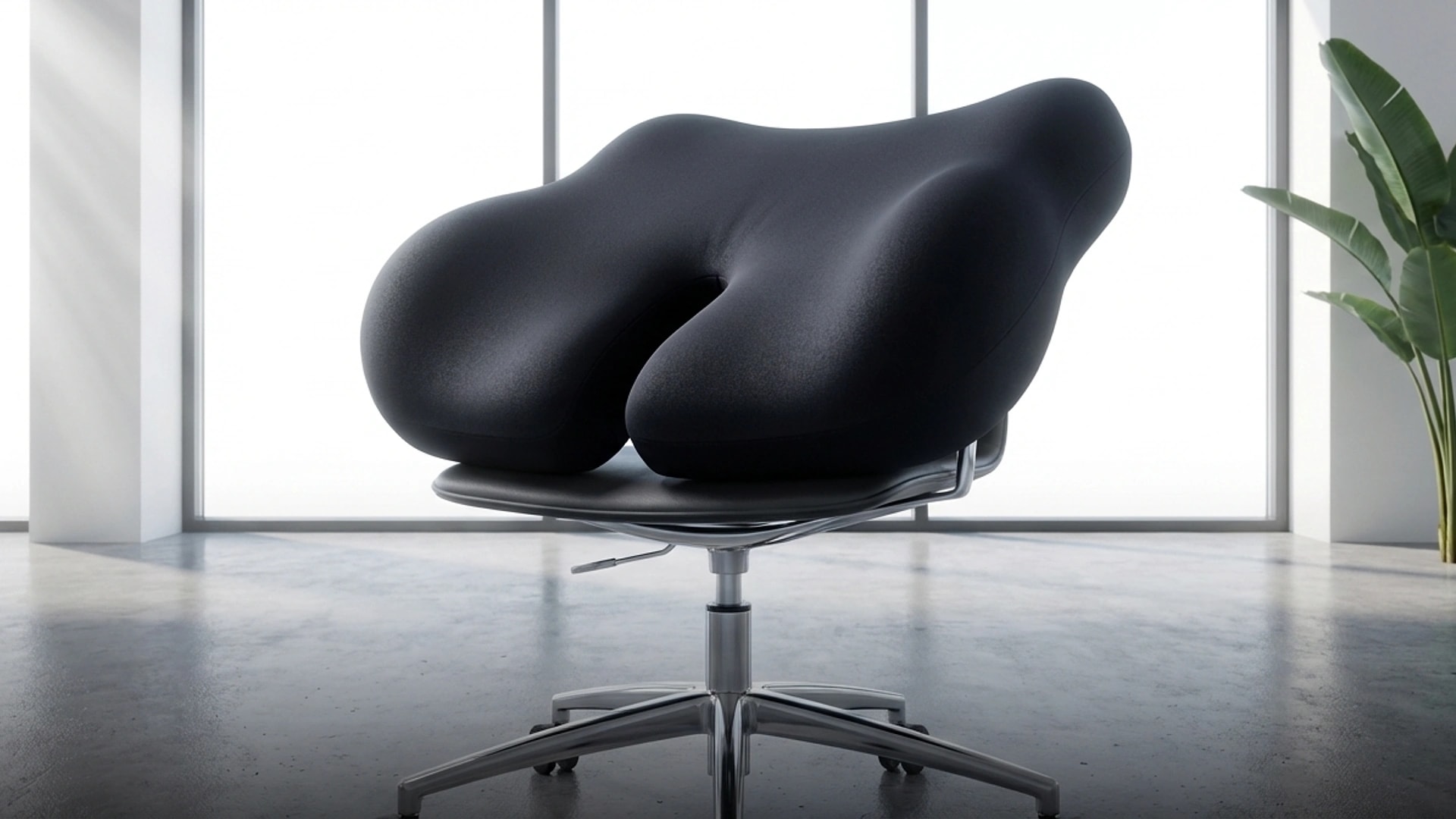
These cushions feature a U-shaped or V-shaped channel at the rear that suspends the tailbone above the sitting surface. They are specifically designed for people with coccydynia (tailbone pain), post-surgical recovery, or sciatica. The ERGOLA Pressure Relief Cushion combines this cutout design with high-density memory foam for targeted pressure relief.
Donut Cushions
Ring-shaped cushions with a center hole redistribute weight to the thighs while completely offloading the perineal area. They are most commonly used for hemorrhoid relief or post-surgical recovery rather than everyday office use.
Key Features to Compare
When evaluating seat cushions for office use, these features separate products that last from products you will replace in a month.
- Material density: For memory foam, look for 50-80 kg/m3 density. Below 40, and the cushion compresses flat within weeks. Higher density provides more support but may feel firmer initially.
- Shape and contour: Contoured cushions with sculpted edges for your thighs outperform flat pads. The contour should match your hip width comfortably without squeezing.
- Non-slip base: A rubber or silicone grip on the bottom is essential. A cushion that slides around the chair defeats its purpose and becomes a constant distraction.
- Removable, washable cover: Mesh or breathable fabric covers that zip off for machine washing are far more hygienic than fixed covers.
- Weight capacity: Most cushions are rated for 100-120 kg. If you are near or above that range, look for reinforced or high-density options that will not bottom out.
- Dimensions: Measure your chair seat before buying. A cushion that overhangs the edges will not sit flat and may create an unstable surface.
The ERGOLA Ergonomic Seat Cushion checks all these boxes with 60 kg/m3 density foam, a contoured design, and a ventilated mesh cover. It is engineered specifically for office chair use.
Testing and Choosing Your Cushion
Selecting the right seat cushion is more personal than most people expect. Your body weight, hip width, chair type, and specific pain points all influence which cushion works best for you.

Start by identifying your primary goal. If your main issue is tailbone pain, prioritize a coccyx cutout design. If you want general comfort improvement and better posture, a contoured wedge cushion is likely the better choice. If heat buildup is a concern, gel or gel-infused foam should be at the top of your list.
The Break-In Period
Memory foam cushions need 3-5 days of regular use to fully conform to your body. The first day may actually feel firmer than expected. Do not judge a new cushion based on the first sitting session alone. Give it a full work week before deciding if it is right for you.
Chair Compatibility
Not every cushion works with every chair. Flat-bottomed cushions suit most standard office chairs. However, if your chair already has a contoured seat pan, adding a thick cushion can raise you too high relative to your desk, creating shoulder and wrist strain. Measure the gap between your current seat height and your desk surface to ensure a cushion will not push you above the optimal typing position.
With vs Without: What Changes
The difference between sitting with and without an ergonomic cushion is both measurable and perceptible. Studies using pressure mapping technology show the contrast clearly.
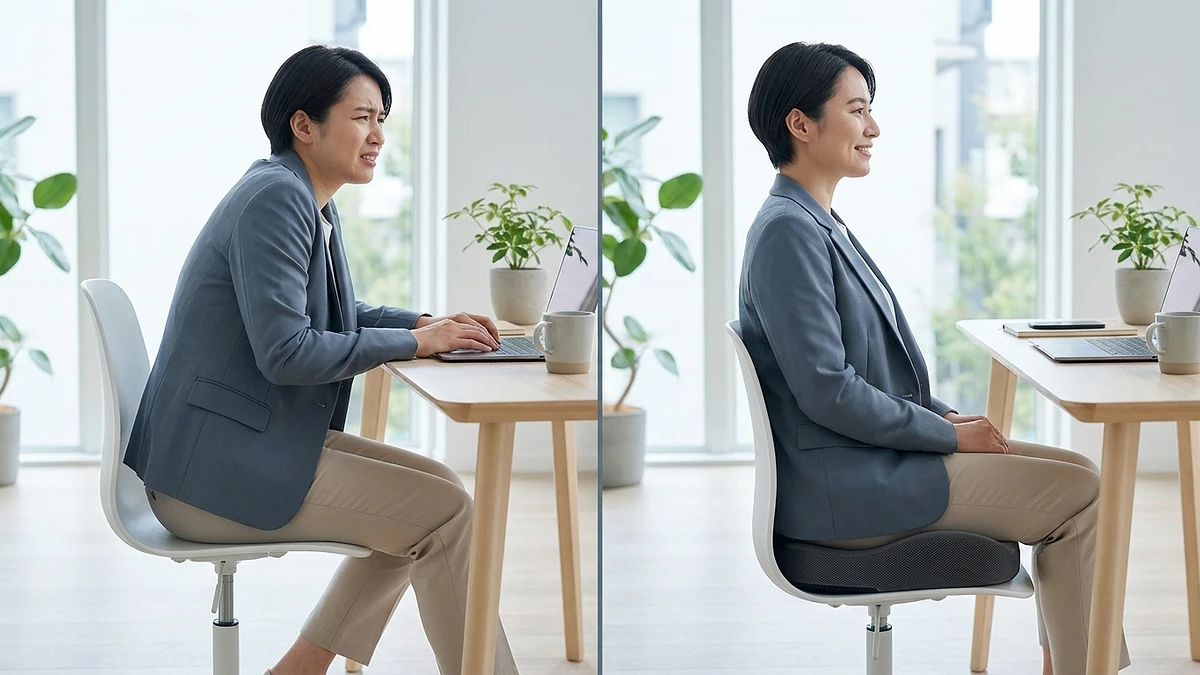
A 2020 study in the International Journal of Industrial Ergonomics compared pressure distribution in office workers using standard chair surfaces versus contoured memory foam cushions. The cushion group showed 38% lower peak pressure at the ischial tuberosities and reported 45% less discomfort after six hours of sitting.
What you are likely to notice in the first week:
- Less fidgeting and position-shifting during long work sessions
- Reduced or eliminated tailbone soreness at end of day
- Less lower back fatigue, especially when paired with appropriate lumbar support
- Improved focus during afternoon hours when discomfort typically peaks
The benefits compound over time. After 4-6 weeks, many users report that sitting without their cushion feels noticeably uncomfortable, not because of dependency, but because they have become aware of what proper pressure distribution actually feels like.
Best Practices for Daily Use
Getting the most from your seat cushion requires more than just placing it on your chair. A few habits ensure it works as intended.
Positioning
Place the cushion all the way to the back of your chair seat so your sit bones rest on the thickest, most supportive part. Your thighs should rest on the cushion with your feet flat on the floor. If a coccyx cutout is present, make sure it aligns with your tailbone, not shifted to one side.
Break Intervals
Even with the best cushion, your body needs movement. Stand and walk for 2-3 minutes every 45-60 minutes. This is not a limitation of the cushion but a fundamental requirement of human physiology. Consider pairing your cushion with desk exercises for lower back pain relief.
Cleaning
Remove and wash the cover every 1-2 weeks. Spot clean the foam core with a damp cloth and mild soap if needed. Never machine wash or soak memory foam, as it absorbs water and dries slowly, creating a breeding ground for mildew.
Pairing With Other Ergonomic Tools
A seat cushion works best as part of a complete ergonomic setup. Pair it with a lumbar support pillow for your lower back and ensure your overall workstation setup follows ergonomic guidelines. The combination of proper seat support, lumbar support, and correct monitor height creates a setup that protects your entire spine.
When to Replace Your Cushion
No cushion lasts forever. Memory foam degrades with daily use, losing its ability to conform and support over time. Here are the signs it is time for a replacement:
- Visible compression: The cushion no longer springs back to its full shape after you stand up. A permanent body impression means the foam cells have broken down.
- Bottoming out: You can feel the hard chair surface through the cushion, especially after an hour or two of sitting.
- Return of symptoms: If the discomfort your cushion originally resolved starts coming back, the cushion has likely lost its therapeutic properties.
- Age: High-quality memory foam cushions typically last 2-3 years with daily use. Budget options may need replacement within 6-12 months.
Investing in a higher-density cushion upfront typically costs less over time because it maintains its performance longer. The ERGOLA seat cushion for office chairs is built with longevity in mind, using foam densities that resist premature compression.
The Bottom Line
A seat cushion for your office chair is one of the simplest, most cost-effective ergonomic upgrades you can make. It reduces pressure on your tailbone and sit bones, improves circulation, and helps maintain better posture throughout long work days.
Choose based on your specific needs: coccyx cutout for tailbone pain, wedge for posture correction, or contoured foam for all-around comfort. Give any new cushion a full week to break in, position it correctly, and pair it with regular movement breaks for the best results. Your body spends more time on your office chair than almost any other surface. Make sure that surface is working with you, not against you.