
Best Cushion for Sciatica Pain Relief: What Actually Works
Sciatica affects an estimated 10-40% of the population at some point in their lives, according to research published in the New England Journal of Medicine. For those who sit for extended periods, the condition can turn every workday into an endurance test of pain, numbness, and frustration.
The right seat cushion will not cure sciatica, but it can significantly reduce the pain you experience while sitting. The wrong cushion, or no cushion at all, can make the condition noticeably worse. This guide explains what sciatica actually is, how cushions help, and which features to look for based on your specific symptoms.
Understanding Sciatica: What Is Actually Happening
Sciatica is not a diagnosis in itself. It is a symptom of an underlying condition that irritates or compresses the sciatic nerve, the longest nerve in your body. This nerve runs from the lower lumbar spine, through the buttock, and down the back of each leg to the foot.
The three most common causes of sciatic nerve irritation are:
- Herniated disc: A lumbar disc bulges or ruptures, pressing on the nerve root where it exits the spine. This accounts for approximately 90% of sciatica cases.
- Piriformis syndrome: The piriformis muscle in the buttock spasms or tightens, compressing the sciatic nerve as it passes beneath or through the muscle. This is more common in people who sit for prolonged periods.
- Spinal stenosis: Narrowing of the spinal canal in the lumbar region compresses the nerve roots. This is more common in adults over 50.
Regardless of the cause, the result is similar: pain, tingling, numbness, or weakness that radiates from the lower back or buttock down the leg. The severity ranges from a mild ache to sharp, electric-shock-like pain that makes sitting nearly impossible.
How Sitting Makes Sciatica Worse
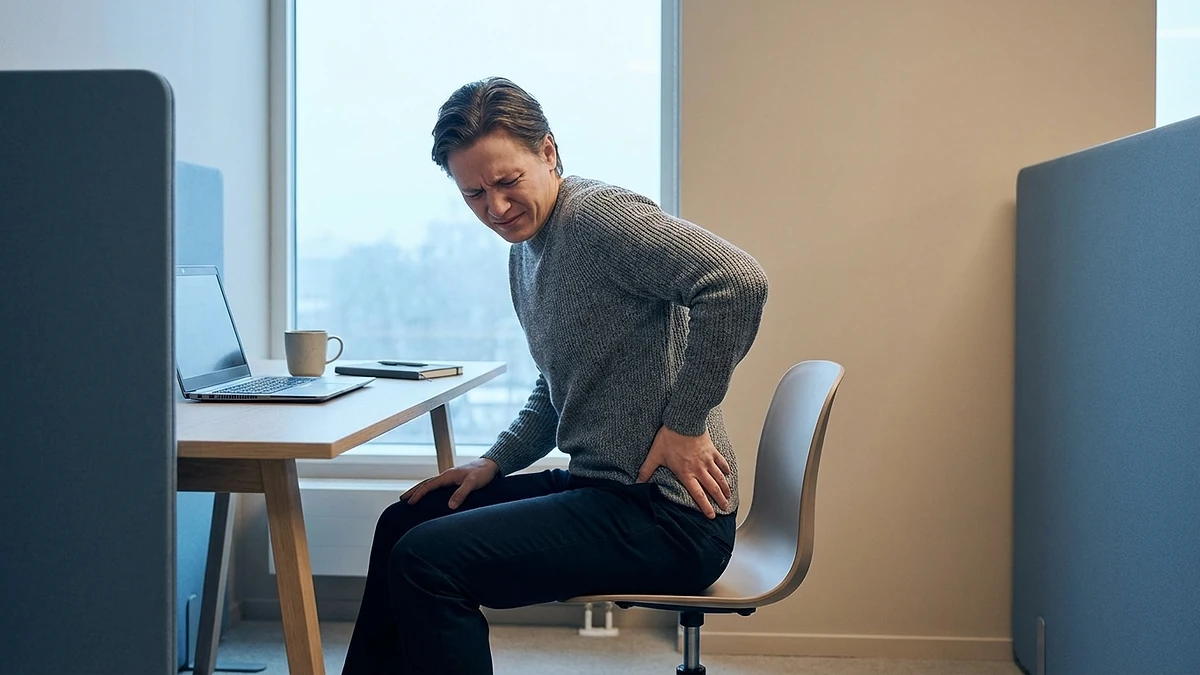
Sitting is often the most painful position for people with sciatica, and the biomechanics explain why. When you sit on a flat, hard surface, your body weight compresses directly onto the structures surrounding the sciatic nerve.
Several mechanisms are at work:
- Increased disc pressure: Sitting raises intradiscal pressure by 40% compared to standing. If a herniated disc is compressing your nerve root, sitting literally squeezes the disc harder against the nerve.
- Piriformis compression: The piriformis muscle sits directly beneath your glutes. When you sit, your body weight presses the piriformis against the hard seat surface, which can compress the sciatic nerve that runs underneath it.
- Posterior pelvic tilt: Flat seats encourage your pelvis to tilt backward, flattening the lumbar curve. This shifts the load to the posterior portion of the lumbar discs, exactly where herniations typically occur.
- Reduced blood flow: Sustained pressure on the gluteal region restricts blood flow to the sciatic nerve and surrounding tissues, impairing their ability to heal and increasing sensitivity to pain.
A 2017 study in the Archives of Physical Medicine and Rehabilitation found that sciatica patients who sat for more than 6 hours daily had significantly worse outcomes than those who limited sitting to under 3 hours, even with identical underlying pathology.
How the Right Cushion Helps
A well-designed sciatica cushion does not just add padding. It addresses the specific mechanical factors that make sitting painful for sciatic nerve conditions.
Pressure Redistribution
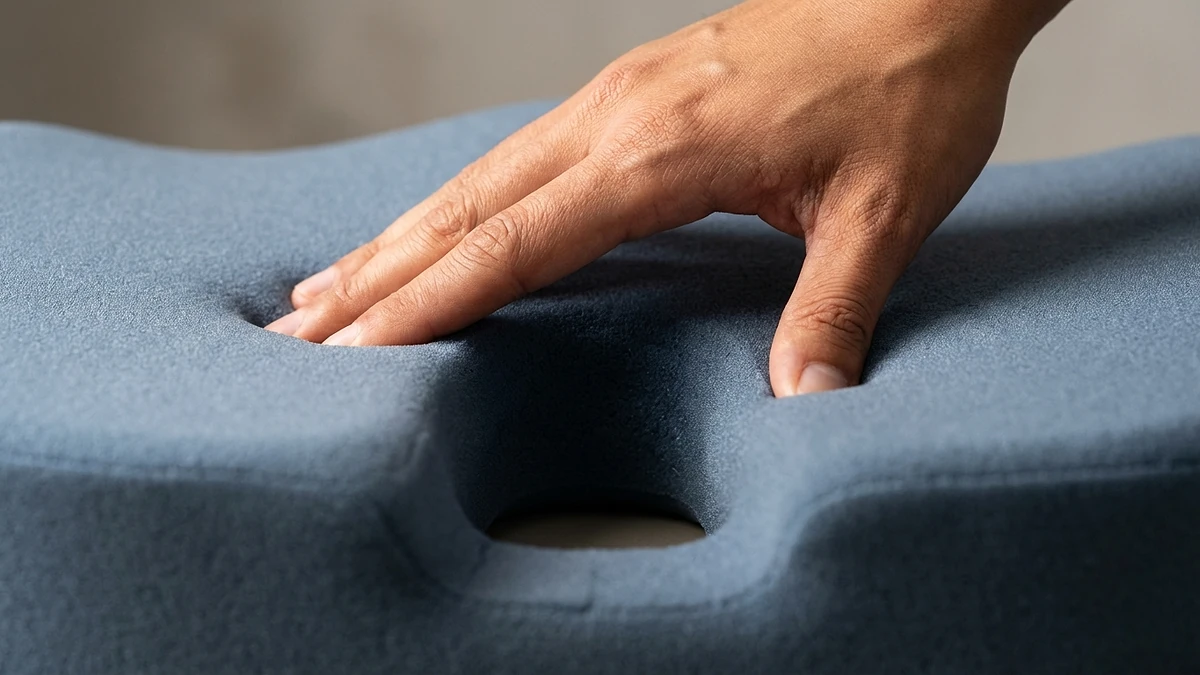
Contoured cushions shift your body weight from the center of your buttocks (where the sciatic nerve is most vulnerable) to your thighs and the outer portions of your hips. Pressure-mapping studies show that a well-contoured memory foam cushion can reduce peak pressure on the ischial tuberosities by 30-45%.
Coccyx and Tailbone Relief
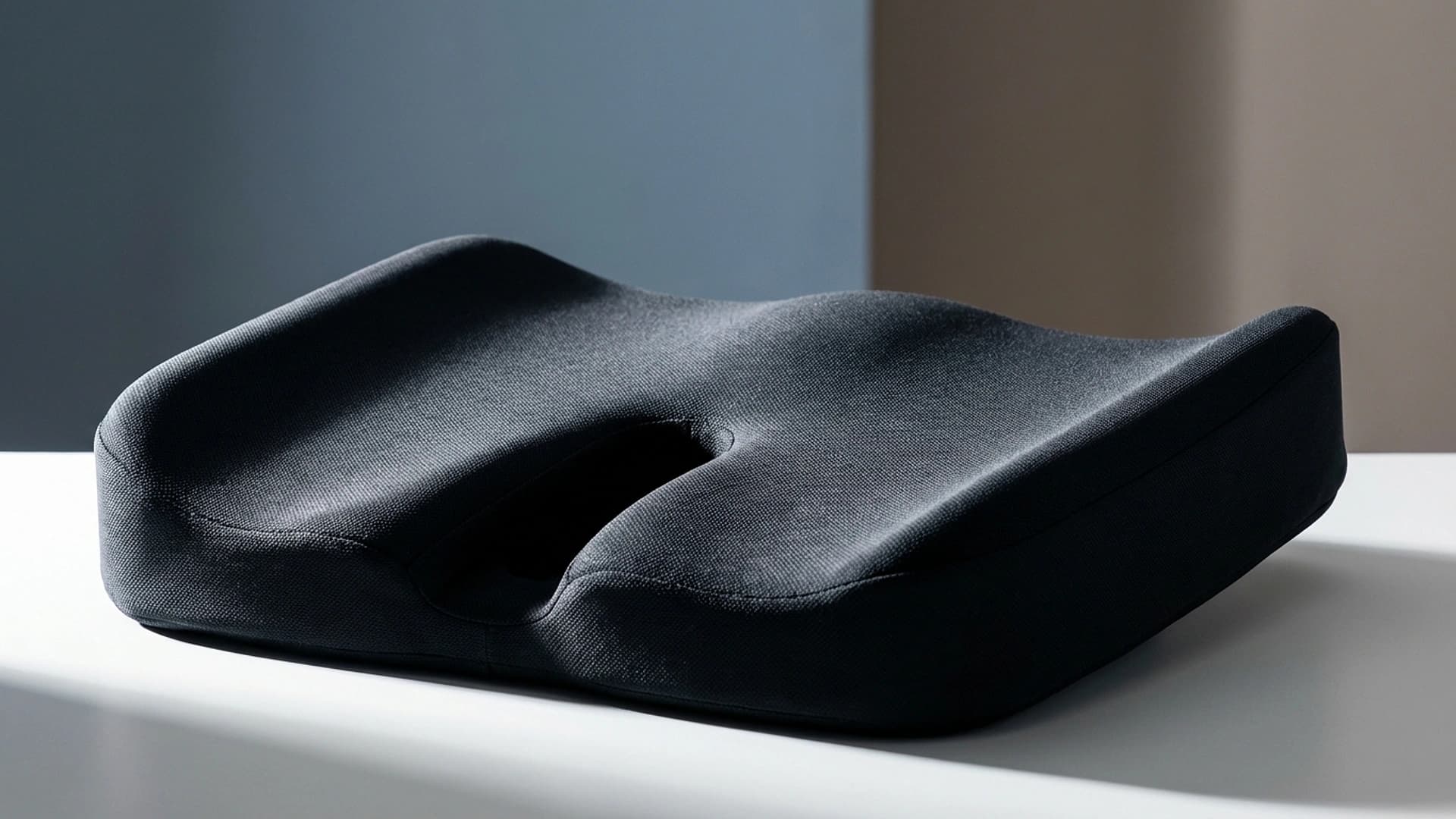
Cushions with a U-shaped or V-shaped cutout at the rear eliminate contact between your tailbone and the sitting surface. This is critical because the coccyx sits directly above where the sciatic nerve passes, and direct pressure here can radiate pain down the nerve pathway. The ERGOLA Pressure Relief Cushion features this cutout design with high-density memory foam for targeted relief.
Posture Improvement
Wedge-shaped cushions tilt your pelvis slightly forward, restoring the natural lumbar lordosis that flat seats eliminate. This anterior tilt shifts disc pressure away from the posterior margin where most herniations occur, reducing nerve compression at the source.
Cushion Features That Matter for Sciatica
Not all seat cushions are suitable for sciatica. Here are the specific features that make a difference for this condition:
- Coccyx cutout: This is the single most important feature for sciatica sufferers. The U-shaped channel at the rear of the cushion suspends the tailbone and reduces pressure on the sciatic nerve pathway. Without this feature, you are just sitting on a padded surface that still compresses the nerve.
- High-density foam (50+ kg/m3): Low-density foam compresses flat under body weight, losing its pressure-redistribution properties within minutes. High-density memory foam maintains its contour throughout the day.
- Slight wedge angle: A 5-8 degree forward tilt improves pelvic alignment and reduces disc pressure. Some cushions build this angle into the design; others require you to position the thicker end at the back.
- Wide enough for your hips: A cushion that is too narrow forces your sit bones onto the hard seat surface on either side, defeating the purpose entirely. Measure your chair and your hip width before purchasing.
- Non-slip base: You will shift position more frequently with sciatica than without it. A cushion that slides around the chair requires constant readjustment and cannot provide consistent pressure relief.
Memory Foam vs Gel for Sciatica
Both materials have their merits, but for sciatica specifically, memory foam tends to be the better choice. Here is why:
Memory foam conforms precisely to your body's contours, creating even contact across the entire sitting surface. This maximizes pressure redistribution, which is the primary therapeutic mechanism for sciatica relief. Gel cushions distribute pressure well but do not conform as closely, meaning pressure peaks are slightly higher at the ischial tuberosities.
Gel does excel at temperature regulation. If heat buildup worsens your symptoms (some sciatica patients report increased pain with warmth), a gel-infused foam cushion offers a compromise. For a thorough comparison of these materials, see our memory foam vs gel cushion material comparison.
The ideal combination for sciatica is a high-density memory foam base with a gel layer on top. This provides the conforming support of foam with the cooling properties of gel.
Sciatica Support While Driving
Driving with sciatica presents unique challenges. Car seats are typically contoured in ways that do not accommodate sciatic nerve sensitivity, and the vibration from driving can aggravate symptoms.
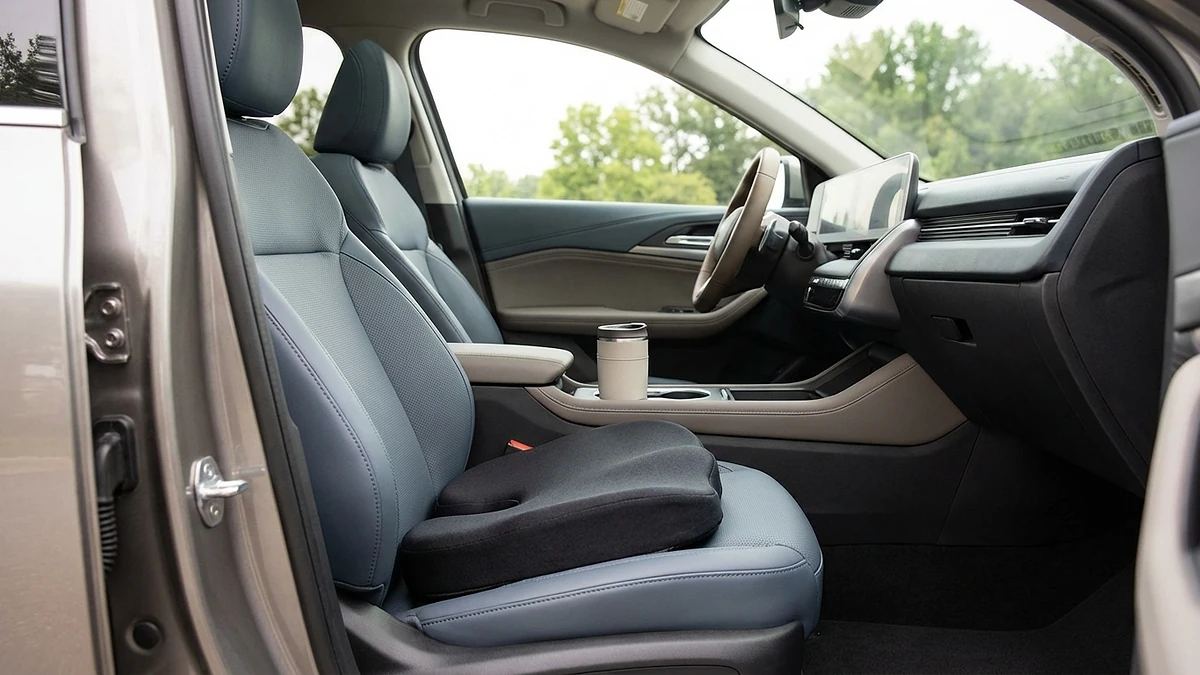
A portable sciatica cushion can make driving significantly more comfortable, but car seats have specific requirements:
- Slimmer profile: Car seats have less room than office chairs. A thick cushion may raise you too close to the roof or change your angle relative to the pedals. Look for cushions in the 6-8 cm height range for car use.
- Non-slip base is essential: Car seats often have leather or vinyl surfaces that are more slippery than office chair upholstery. A rubber-grip base is not optional for automotive use.
- Same coccyx cutout applies: The pressure relief principles are identical whether at a desk or in a car. The coccyx cutout remains the most important feature.
- Pair with lumbar support: Most car seats have inadequate lumbar support. A small lumbar support pillow behind your lower back complements the seat cushion by maintaining your spinal curve during long drives.
For drives longer than 30 minutes, schedule brief stops to stand and stretch. Even 2-3 minutes of walking can temporarily reduce sciatic nerve irritation.
Complementary Strategies
A sciatica cushion is most effective when combined with other evidence-based approaches:
Stretching
Piriformis stretches and sciatic nerve glides can reduce nerve tension. The seated figure-four stretch and supine piriformis stretch are two of the most effective. Perform these 2-3 times daily and always before long sitting sessions. For more exercises, see our guide on desk exercises to relieve lower back pain.
Lumbar Support
Maintaining the lumbar curve reduces disc pressure on the nerve root. A dedicated lumbar support pillow for your office chair works synergistically with a seat cushion by addressing the spinal component of sciatica while the cushion addresses the gluteal compression component.
Standing Breaks
Standing relieves the intradiscal pressure and piriformis compression that worsen sciatica while sitting. Every 20-30 minutes, stand for 1-2 minutes. Walking is even better than standing still, as it promotes blood flow to the compressed nerve.
Heat and Cold Therapy
Ice applied to the affected buttock for 15-20 minutes can reduce inflammation during acute flare-ups. Heat can relax the piriformis and surrounding muscles during chronic phases. Many sciatica sufferers alternate between the two depending on the day.
When a Cushion Is Not Enough
A sciatica cushion is a management tool, not a treatment for the underlying cause. Seek professional medical evaluation if:
- Pain is severe and does not improve with position changes, stretching, or cushion use
- You experience progressive weakness in the leg or foot
- Numbness in the groin or saddle area develops (this is a medical emergency called cauda equina syndrome)
- Symptoms have persisted for more than 8-12 weeks without improvement
- Pain began after a traumatic injury
- You have difficulty controlling bladder or bowel function
Physical therapy is the first-line treatment for most sciatica cases and can resolve symptoms in 6-12 weeks. Your therapist may use manual therapy, targeted exercises, and nerve mobilization techniques. In persistent cases, epidural steroid injections or surgical intervention may be necessary.
The Bottom Line
The right cushion can meaningfully reduce sciatica pain while sitting by redistributing pressure away from the sciatic nerve pathway. Prioritize a coccyx cutout design with high-density memory foam and a slight wedge angle. Use it consistently at your desk, in the car, and anywhere else you sit for extended periods.
Combine the cushion with regular stretching, lumbar support, and standing breaks for the best results. And if your symptoms include progressive weakness, numbness, or loss of function, see a healthcare provider promptly. A cushion manages symptoms, but resolving the underlying cause often requires professional guidance.