 Marcus Rivera
How to Fix Lower Back Pain from Sitting All Day
Lower back pain from sitting is not just an inconvenience. It is a public health crisis disguised as a workday annoyance. The World Health Organization identifies low back pain as the leading cause of disability globally, and prolonged sitting is one of the most significant contributing factors.
According to the CDC, adults in the United States sit for an average of 6.5 hours per day. For office workers, that number climbs to 10-12 hours when you include commuting and evening screen time. Your spine was not designed for this, but that does not mean you have to accept the pain.
This guide walks through five evidence-based fixes for lower back pain caused by sitting, from posture adjustments you can make right now to long-term strategies that prevent the problem from coming back.
Understanding the Problem: Why Sitting Hurts Your Back
To fix the pain, you first need to understand what is happening in your body. Sitting creates a cascade of biomechanical changes that strain the lumbar spine from multiple angles.
Disc Pressure Increases
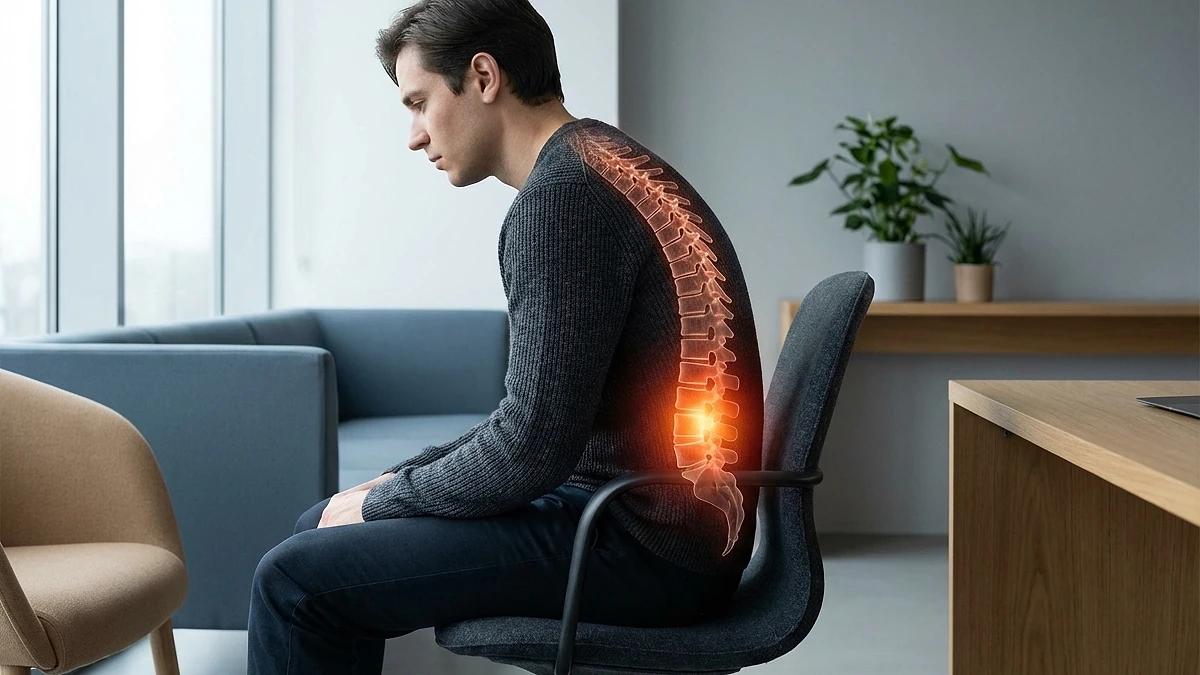
Research by Nachemson and colleagues demonstrated that sitting increases intradiscal pressure in the lumbar spine by approximately 40% compared to standing, and by up to 90% compared to lying down. When you sit with poor posture, specifically a rounded lower back, this pressure shifts to the posterior portion of the disc, where herniations most commonly occur.
Hip Flexors Tighten and Shorten
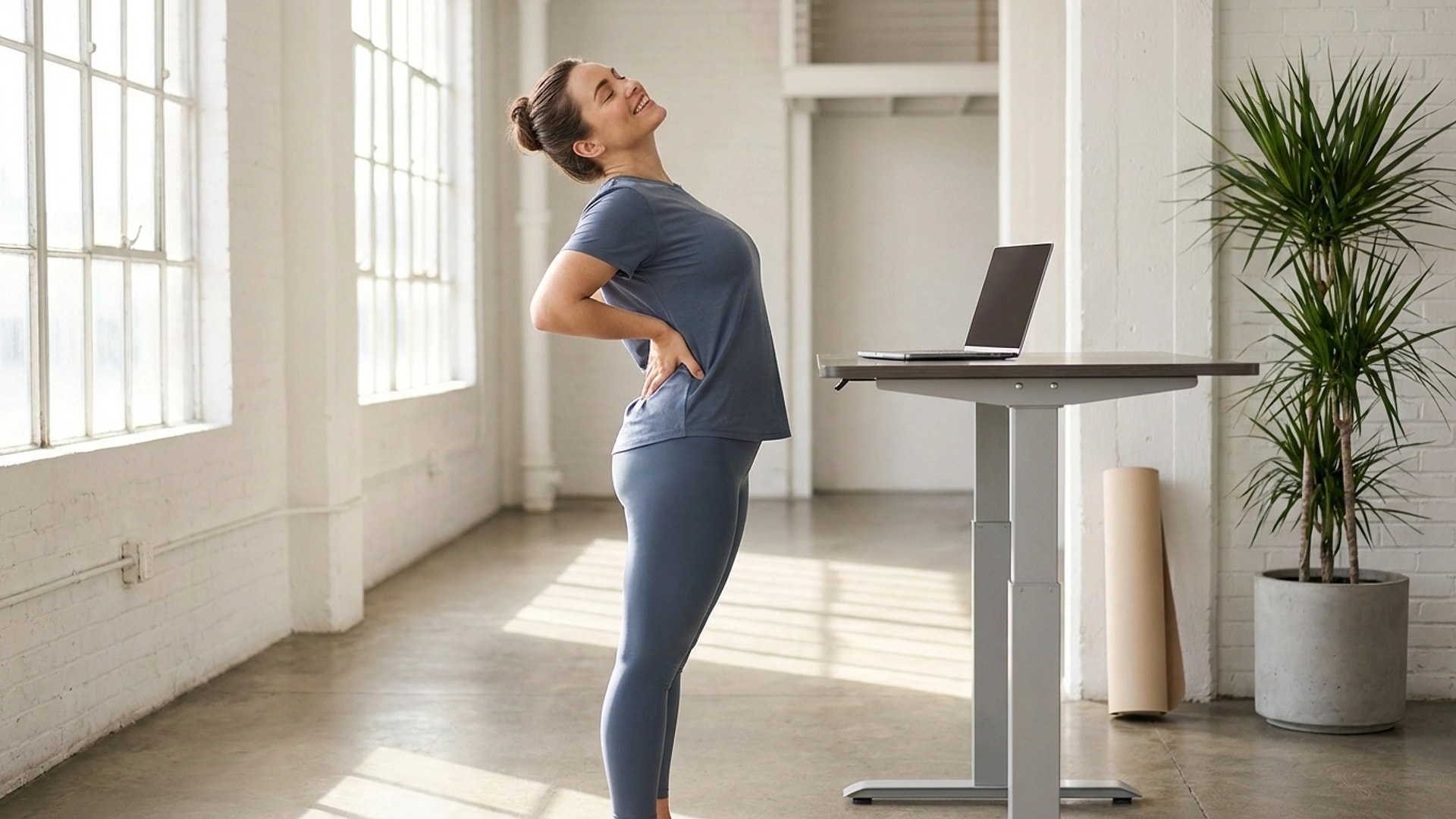
Your hip flexors, particularly the iliopsoas muscle group, remain in a shortened position throughout the entire time you sit. Over weeks and months, these muscles adaptively shorten. Tight hip flexors pull the pelvis into an anterior tilt when you stand, increasing the curve of your lumbar spine and creating compressive forces on the lower vertebrae.
Gluteal Muscles Weaken
Sitting places your glutes in a stretched, inactive position for hours at a time. This leads to what physical therapists call "gluteal amnesia," where the muscles lose their ability to activate effectively. Since your glutes are primary stabilizers of the pelvis and lower back, their weakness forces smaller, less capable muscles to compensate, leading to fatigue and pain.
Core Muscles Disengage
When you lean against a chair backrest, your core muscles essentially turn off. They are not needed to keep you upright because the chair does that work. Over time, this chronic disengagement weakens the deep stabilizing muscles of the trunk, leaving your spine vulnerable to injury during movement.
Quick Self-Assessment
Not all lower back pain comes from sitting. Before assuming your chair is the culprit, check these five indicators that your pain is sitting-related:
- Timing: Pain develops or worsens during or after prolonged sitting sessions, especially in the afternoon.
- Relief with movement: Standing up, walking, or stretching provides temporary relief within minutes.
- Location: Pain is centralized in the lower lumbar region (L4-L5 area) and does not radiate below the knee.
- Stiffness pattern: You feel stiff when first standing up but loosen up after moving for a few minutes.
- Posture correlation: The pain is worse on days when you sit for longer periods or in less supportive seating.
If you checked three or more of these, your sitting habits are very likely a primary contributor. The fixes below address the root causes directly.
Fix 1: Correct Your Sitting Posture
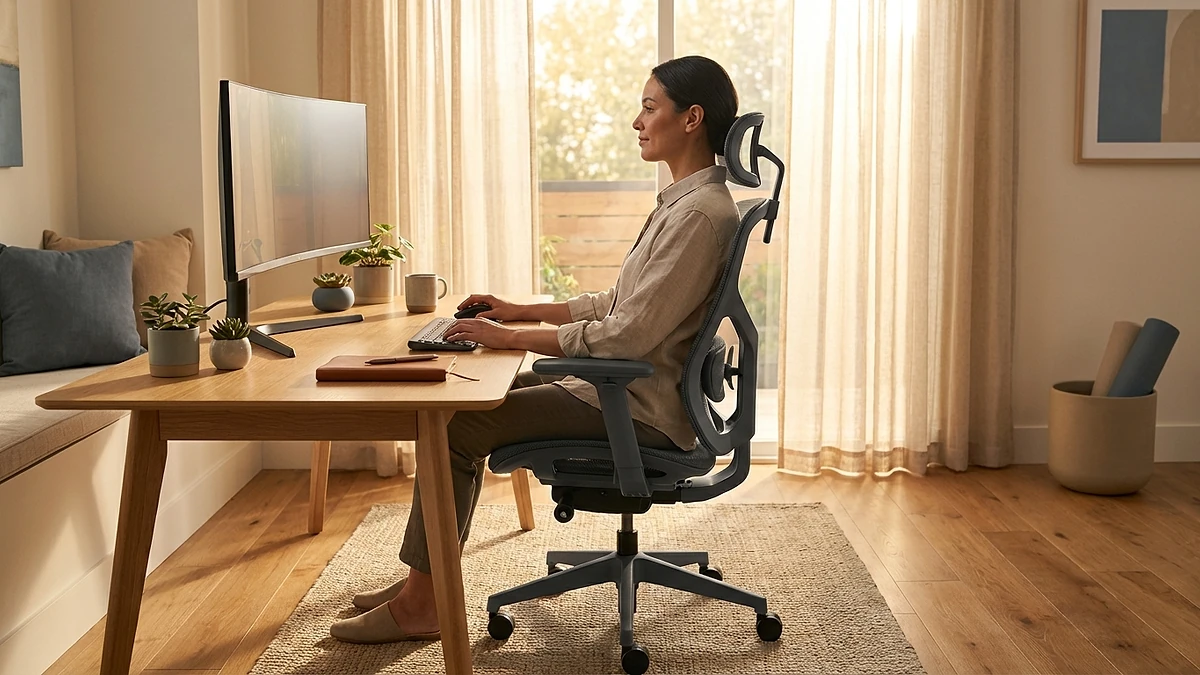
Posture correction is the first and most immediate fix. It costs nothing and produces results within days. Here is the step-by-step setup:
- Feet flat on the floor: Your thighs should be parallel to the ground or angled slightly downward. If your feet do not reach the floor, use a footrest.
- Hips pushed to the back of the chair: Eliminate the gap between your lower back and the backrest. This is where a lumbar support pillow becomes invaluable.
- Maintain the lumbar curve: Your lower back should have a gentle inward curve, not be rounded outward. The lumbar support should sit at belt level, in the small of your back.
- Shoulders relaxed and back: Not pulled back militarily, just not hunched forward. Think of gently drawing your shoulder blades down and slightly together.
- Monitor at eye level: The top third of your screen should be at eye height. This prevents the forward head posture that creates a chain reaction of tension down to your lower back.
- Elbows at 90-100 degrees: Armrests should support your forearms without raising your shoulders.
This posture feels unnatural at first if you have been sitting poorly for years. That is normal. Set a reminder every 30 minutes for the first two weeks to check and correct your position. After that, it begins to feel automatic.
Fix 2: Upgrade Your Setup
Posture awareness only goes so far if your furniture is working against you. Your chair and desk should make good posture the default, not something you have to constantly fight for.
Your Chair
An ergonomic office chair with adjustable lumbar support, seat depth, and armrests is the foundation of a pain-free setup. The LumaSpine Pro Ergonomic Office Chair provides adjustable lumbar depth and height, allowing you to dial in support precisely where your spine needs it. If replacing your chair is not an option, adding a dedicated lumbar support pillow for your office chair is the next best investment.
Your Seat Surface
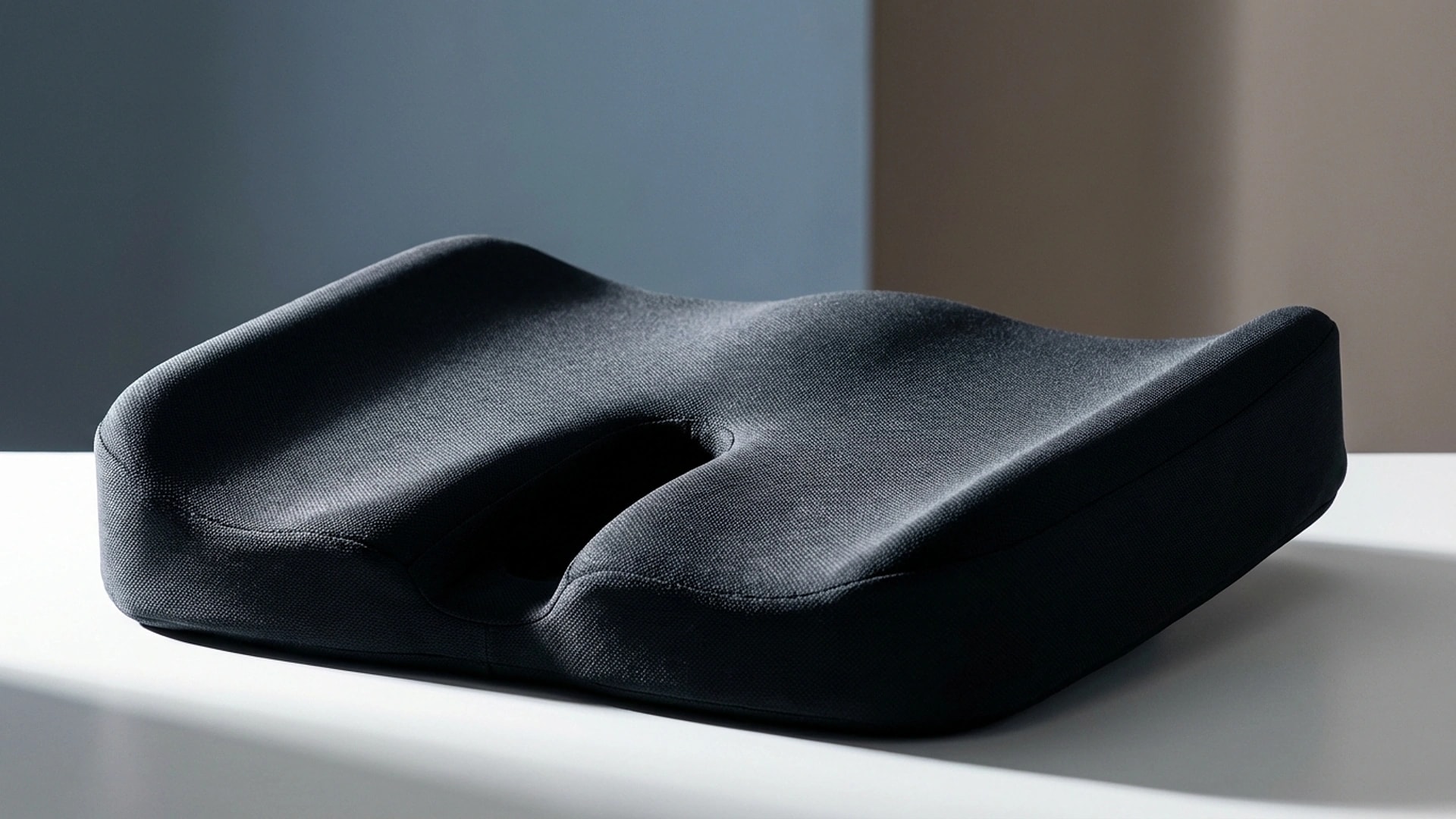
A flat, hard chair seat increases pressure on your sit bones and can contribute to poor pelvic positioning. An ergonomic seat cushion distributes weight more evenly and can add a slight forward tilt that encourages better lumbar alignment.
Your Monitor
If your screen is too low, you will hunch forward. If it is too high, you will crane your neck. Use a monitor arm or simple riser to bring the top third of the screen to eye level. For a complete walkthrough, see our ergonomic home office setup checklist.
Your Desk Height
When seated with your feet flat and back supported, your forearms should rest on the desk at roughly 90 degrees. If your desk is too high, your shoulders will hike up. Too low, and you will slouch forward. Adjustable-height desks solve this problem entirely.
Fix 3: Add Movement to Your Day
No amount of ergonomic equipment eliminates the need for movement. The human body is designed to move, and even perfect sitting posture becomes harmful after extended periods. A 2019 meta-analysis in the British Journal of Sports Medicine found that replacing 30 minutes of daily sitting with light physical activity reduced all-cause mortality risk by 17%.
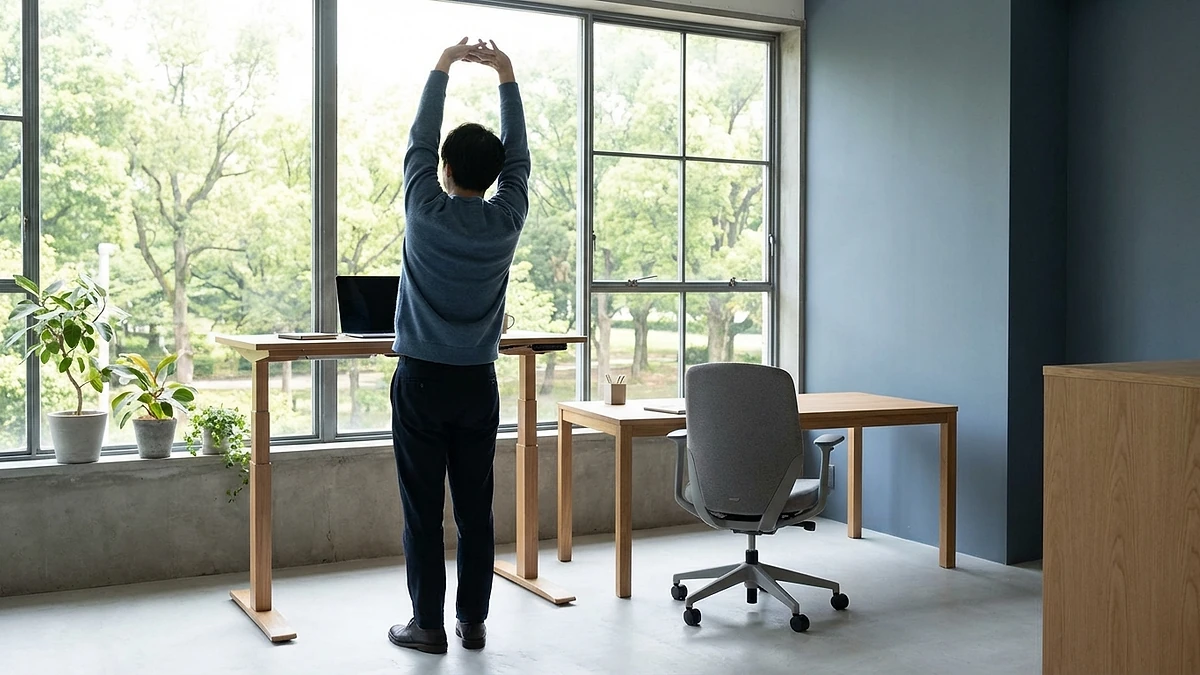
The most effective approach is frequent micro-breaks rather than one long exercise session. Research suggests standing and moving for 2-3 minutes every 30-45 minutes is more protective for spinal health than a single 30-minute workout followed by 8 hours of continuous sitting.
Simple Movement Strategies
- Walking meetings: Take phone calls while walking, even if it is just around your office or home.
- Water bottle strategy: Use a small glass instead of a large bottle. The frequent refill trips add movement naturally.
- Timer-based standing: Set a phone timer for every 30 minutes. Stand, stretch your hip flexors, and walk for 1-2 minutes.
- Commute activity: Park farther away, take the stairs, or walk for part of your commute.
For targeted exercises you can do at your desk, see our guide on 5 desk exercises to relieve lower back pain. These take less than 5 minutes and directly counter the effects of prolonged sitting.
Fix 4: Targeted Exercises and Stretches
Movement breaks prevent stiffness, but targeted exercises address the underlying muscle imbalances that sitting creates. Focus on these three areas:
Hip Flexor Stretches
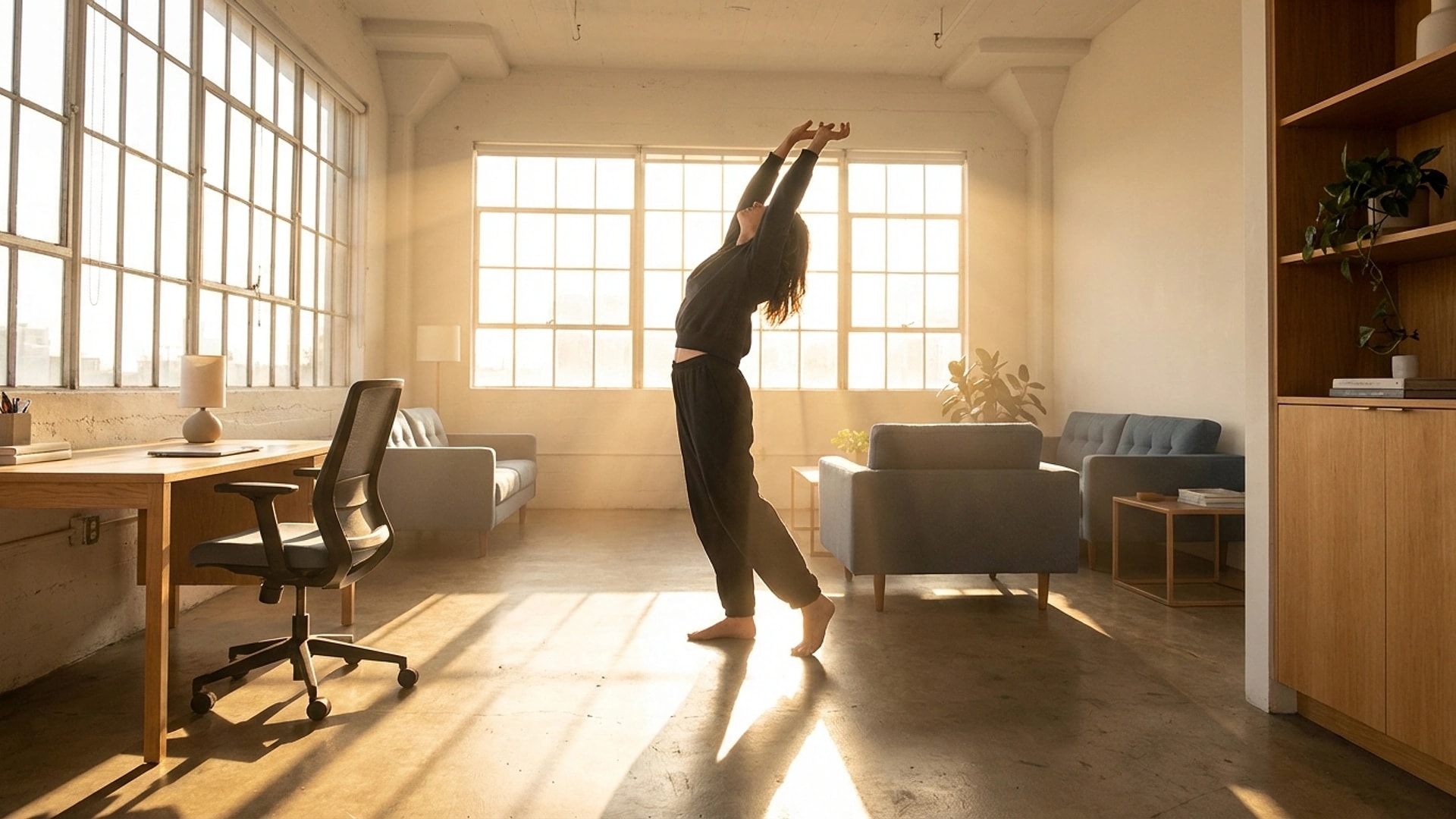
The half-kneeling hip flexor stretch is the gold standard. Kneel on one knee with the opposite foot forward, push your hips gently forward, and hold for 30 seconds per side. Do this 2-3 times daily, especially after long sitting periods.
Glute Activation
Bridges, clamshells, and bodyweight squats wake up dormant gluteal muscles. These do not require a gym. Two sets of 15 reps, performed morning and evening, can significantly improve glute activation within 2-3 weeks.
Core Stabilization
Planks, dead bugs, and bird-dogs train the deep core muscles that support your lumbar spine. Start with 20-second holds and work up to 60 seconds. Focus on maintaining a neutral spine throughout the movement rather than holding for maximum duration with poor form.
A 2018 systematic review in JAMA Internal Medicine found that exercise programs targeting these specific muscle groups reduced chronic low back pain by an average of 35% over 12 weeks. Consistency matters more than intensity.
Fix 5: Support Products That Actually Help
Not all ergonomic products deliver on their promises. These three have consistent evidence and practical benefit for sitting-related lower back pain:
- Lumbar support pillow: A contoured lumbar support pillow fills the gap between your lower back and the chair, maintaining the natural curve without muscular effort. Our evidence-based guide to lumbar support pillows explains what to look for.
- Ergonomic seat cushion: Redistributes pressure from your sit bones and promotes better pelvic alignment. Particularly helpful if your chair has a hard or flat seat pan. The ERGOLA seat cushion for office chairs is purpose-built for all-day sitting.
- Footrest: If your feet do not rest flat on the floor when your chair is at the correct height, a footrest prevents you from sliding forward or perching on the seat edge, both of which strain the lower back.
These products work best in combination. A lumbar pillow alone helps, but a lumbar pillow plus seat cushion plus correct monitor height creates a system where each element reinforces the others.
When to See a Doctor
Most sitting-related lower back pain responds well to the fixes above within 2-4 weeks. However, certain symptoms indicate a more serious condition that requires professional evaluation.
See a doctor promptly if you experience:
- Pain that radiates below the knee, especially down the back of the leg
- Numbness or tingling in the legs, feet, or groin area
- Weakness in one or both legs, such as foot drop or difficulty climbing stairs
- Loss of bladder or bowel control (this is a medical emergency)
- Pain that wakes you from sleep or is not relieved by any position
- Pain following trauma such as a fall or car accident
- Pain that persists beyond 6 weeks despite consistent application of the strategies above
These symptoms may indicate disc herniation, spinal stenosis, or other conditions that require imaging and possibly specialized treatment beyond ergonomic adjustments.
Prevention: A Daily Routine That Protects Your Back
Once you have resolved your current pain, these daily habits prevent it from returning:
- Morning (5 minutes): Hip flexor stretches and glute bridges before sitting down for the day.
- Every 30-45 minutes: Stand, walk for 1-2 minutes, perform one quick stretch.
- Midday (10 minutes): A short walk outside. Sunlight and movement together have compounding benefits for mood and musculoskeletal health.
- End of workday (5 minutes): Full hip flexor stretch sequence, cat-cow spinal mobilization, and standing back extensions.
- Evening: Avoid sitting on soft couches for extended periods. If watching TV, sit on a firmer surface with back support.
This routine adds less than 25 minutes to your day but addresses every mechanism through which sitting creates lower back pain. Combined with a properly set up workstation and appropriate support products, most people can sit for a full workday without pain.
The Bottom Line
Lower back pain from sitting is not inevitable. It is the predictable result of biomechanical stress that your body was not designed to handle, and it responds well to targeted intervention. Correct your posture, upgrade your setup, move frequently, strengthen the right muscles, and use support products that address actual pressure points.
Start with the fix that addresses your biggest issue. For most people, that means adding lumbar support and movement breaks first, then building toward a complete ergonomic setup over time. The pain did not develop overnight, and it will not resolve overnight, but most people notice meaningful improvement within the first week of consistent changes.